
Growing a Vegetable Garden in a Small Backyard on a Tight Budget
In this article
No large lot or expensive setup needed. Learn how to plan, plant, and maintain a productive kitchen garden with minimal upfront cost.
Key Takeaways
- A 4-by-8-foot bed can grow meaningful amounts of food for a family even in a small yard.
- Free or low-cost materials such as cardboard, compost, and salvaged lumber reduce startup costs significantly.
- High-yield crops like lettuce, kale, and bush beans give more food per square foot than lower-yield options.
- Starting from seed costs far less than buying transplants and is straightforward for most vegetables.
- Watering consistently and mulching around plants reduces waste and lowers water bills over the season.
Why a small backyard is enough
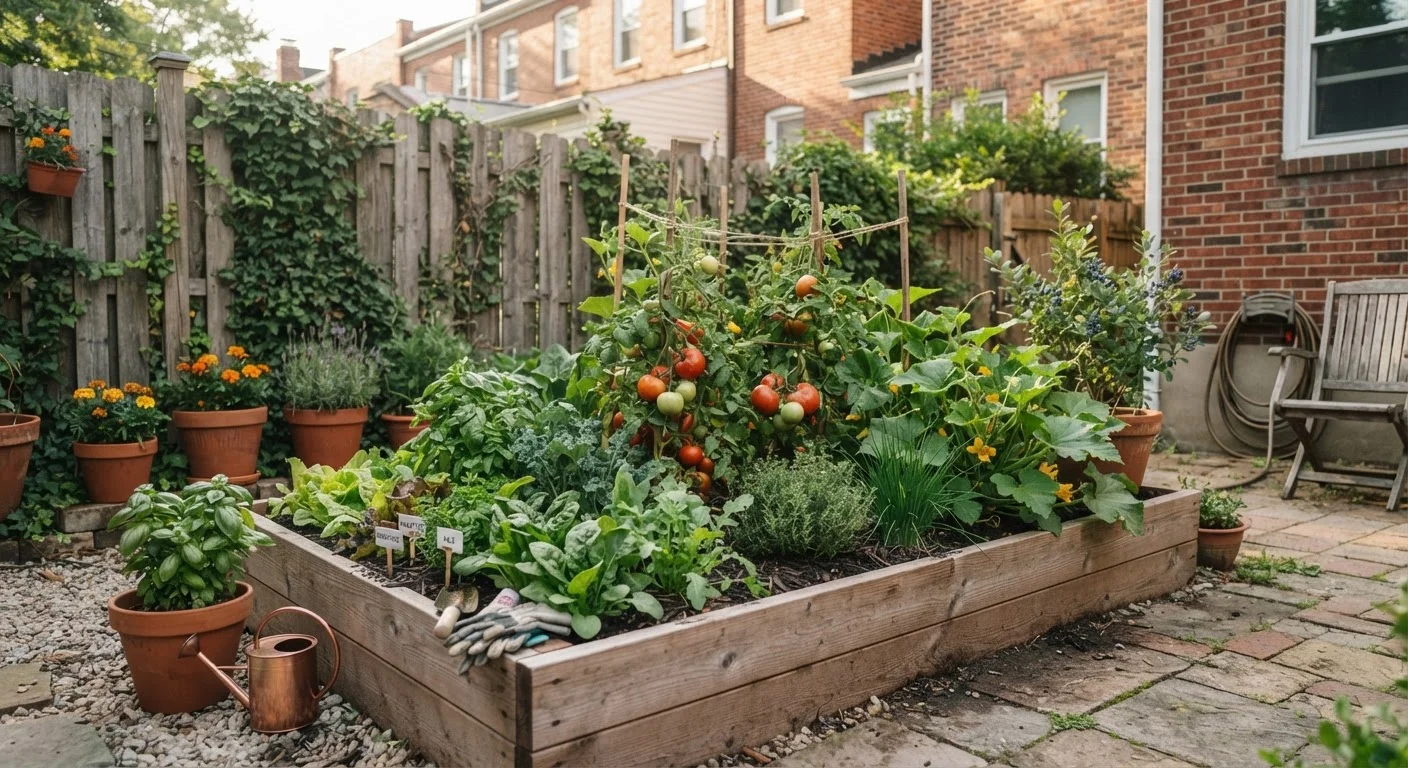
Many families assume vegetable gardening requires a large lot. It does not. A single 4-by-8-foot raised bed, which fits in most backyards including narrow side yards and small patios, can supply a steady stream of salad greens, herbs, and beans through the growing season. The goal is not self-sufficiency but rather reducing your grocery spending on fresh produce while eating food you grew yourself.
Growing your own vegetables pairs naturally with other household budget strategies. If you are already working through a household budget, adding a garden line item can pay back its startup cost within the first season on leafy greens alone, since bagged salad greens carry a high markup at retail.
Raised bed
A contained growing area built above ground level, usually framed with wood or another border material and filled with a soil mix you control.
Direct sowing
Planting seeds directly into the garden bed rather than starting them indoors in pots first and transplanting later.
Cut-and-come-again
A harvesting method where you remove outer leaves from a plant so the center continues producing new growth, extending the harvest period.
Open-pollinated variety
A plant variety pollinated naturally, whose seeds will grow into plants with the same characteristics as the parent, making seed saving reliable.
Soil amendment
Any material mixed into soil to improve its texture, drainage, or nutrient content, such as compost, perlite, or coarse sand.
Planning your layout without spending a dime
Before you buy anything, sketch your space on paper. Note which areas get six or more hours of direct sun per day, since most fruiting vegetables require full sun. Leafy greens and herbs tolerate partial shade, so they can fill shadier corners. Mark where water access is, because hauling a hose long distances gets old fast.
Square-foot gardening is a practical planning method for small spaces. The idea is to divide your bed into one-foot squares and assign each square a specific crop based on plant spacing guidelines printed on seed packets. This avoids wasted space and overplanting. A free grid sketch on paper or a simple spreadsheet is all the tool you need.
If you want to squeeze more production from a single bed, think vertically. A simple trellis made from bamboo stakes and twine (under $5 at most hardware stores) lets climbing beans, cucumbers, and small squash grow upward rather than sprawl outward.
Low-cost ways to build or fill a bed
A standard raised bed frame built from untreated pine 2-by-10 boards costs roughly $25 to $40 in lumber depending on your region. Cedar lasts longer but costs more. Avoid lumber treated with older chemical preservatives near food crops; check product labeling for current food-safe guidance. Salvaged wood from pallets or fence boards can bring the cost to near zero, though inspect pieces for rot before using them.
For the growing medium, a common and inexpensive recipe combines equal parts compost, topsoil, and a drainage amendment such as perlite or coarse sand. Many municipalities offer free or subsidized compost through yard waste programs. Check your local government's public works or parks department website for availability. Filling a 4-by-8-foot bed to a depth of ten inches requires roughly ten to twelve cubic feet of material.
If a raised bed is not practical for your space, large containers work on concrete patios. Five-gallon buckets with drainage holes drilled in the bottom are inexpensive and fit one tomato plant or several herbs each. Fabric grow bags are another low-cost option that stores flat in winter.
For more ideas on low-cost outdoor improvements that complement a garden setup, see weekend curb appeal projects under $100.
Choosing vegetables that give the most return
Not all vegetables are equal in terms of cost savings. Crops that are expensive at the grocery store and easy to grow at home give the best return on your seed investment. Lettuce, spinach, kale, and other cut-and-come-again greens top this list because you can harvest outer leaves repeatedly without pulling the plant. A single packet of mixed salad green seeds costs around $2 to $3 and can yield pounds of greens across several weeks.
Bush beans are productive in small spaces, germinate reliably from direct-sown seed, and need no support structure. Radishes mature in as little as 25 days, making them a useful gap filler between slower crops. Cherry tomatoes produce heavily per plant and are more forgiving than large slicing varieties for first-time growers.
Starting from seed costs roughly one-quarter to one-tenth the price of buying transplants from a nursery. Most warm-season vegetables like beans, squash, and cucumbers are sown directly into the bed after your last frost date. Cool-season crops like lettuce and spinach can go in several weeks before last frost. For details on how affordable food choices connect to nutritional value, this nutrition guide covers the research.
Keeping costs low through the growing season
Once the bed is planted, the main ongoing costs are water and occasional fertilizer. Mulching around plants with straw, shredded leaves, or grass clippings (all free or nearly free) reduces water evaporation and suppresses weeds, cutting both water use and weeding time. A two-inch layer of mulch applied after seedlings are established makes a noticeable difference through dry summer stretches.
Compost from kitchen scraps (vegetable peels, coffee grounds, eggshells) serves as a free slow-release fertilizer. A simple backyard compost bin can be built from four wooden pallets or wire fencing in an afternoon and costs almost nothing. For families working to improve their overall food and health spending, this beginner wellness guide offers related strategies that pair well with home food production.
Saving seeds from open-pollinated (non-hybrid) varieties at the end of the season eliminates seed costs the following year. Dry seeds fully before storing them in labeled paper envelopes in a cool, dark location. Many common vegetables including beans, tomatoes, and peppers are straightforward to save seed from and will produce plants true to the parent.
Save seeds at the end of the season
Let a few bean pods, tomato fruits, or pepper fruits fully ripen past eating stage on the plant. Collect and dry the seeds thoroughly before storing them in paper envelopes somewhere cool and dry. Seeds saved this way from open-pollinated varieties cost nothing and are ready to plant the following spring.
Frequently Asked Questions

Author
Home on a Budget Editorial Team
Home on a Budget Editorial Team is the collective byline for our editorial team and contributor network. Articles published under this byline or an editorial pen name are researched, written, and reviewed according to our editorial standards for clarity, consistency, and independence before publication.
View all articles