
Eating Well on a Tight Budget: What Nutrition Science Actually Says
In this article
Discover what research says about affordable, nutritious eating and why healthy food doesn't have to cost more than processed alternatives.
Key Takeaways
- Dried legumes, eggs, oats, and frozen vegetables are among the most nutrient-dense and affordable foods available.
- Nutrition research does not support the idea that healthy food is inherently more expensive than processed food.
- Cooking staple ingredients at home lowers per-meal cost while giving families control over sodium, sugar, and fat.
- Frozen and canned produce retain most of their nutrients and often cost less than fresh equivalents.
- Federal food assistance programs exist to help families who cannot cover grocery costs from their income alone.
Why the 'healthy food costs more' belief is worth examining
The idea that nutritious eating requires a large grocery budget is widespread, but the evidence behind it is thinner than most people expect. Much of the perception comes from comparing premium products, organic produce, and specialty health items against the cheapest processed snacks. That is not a fair comparison, and it is not one that nutrition researchers typically make.
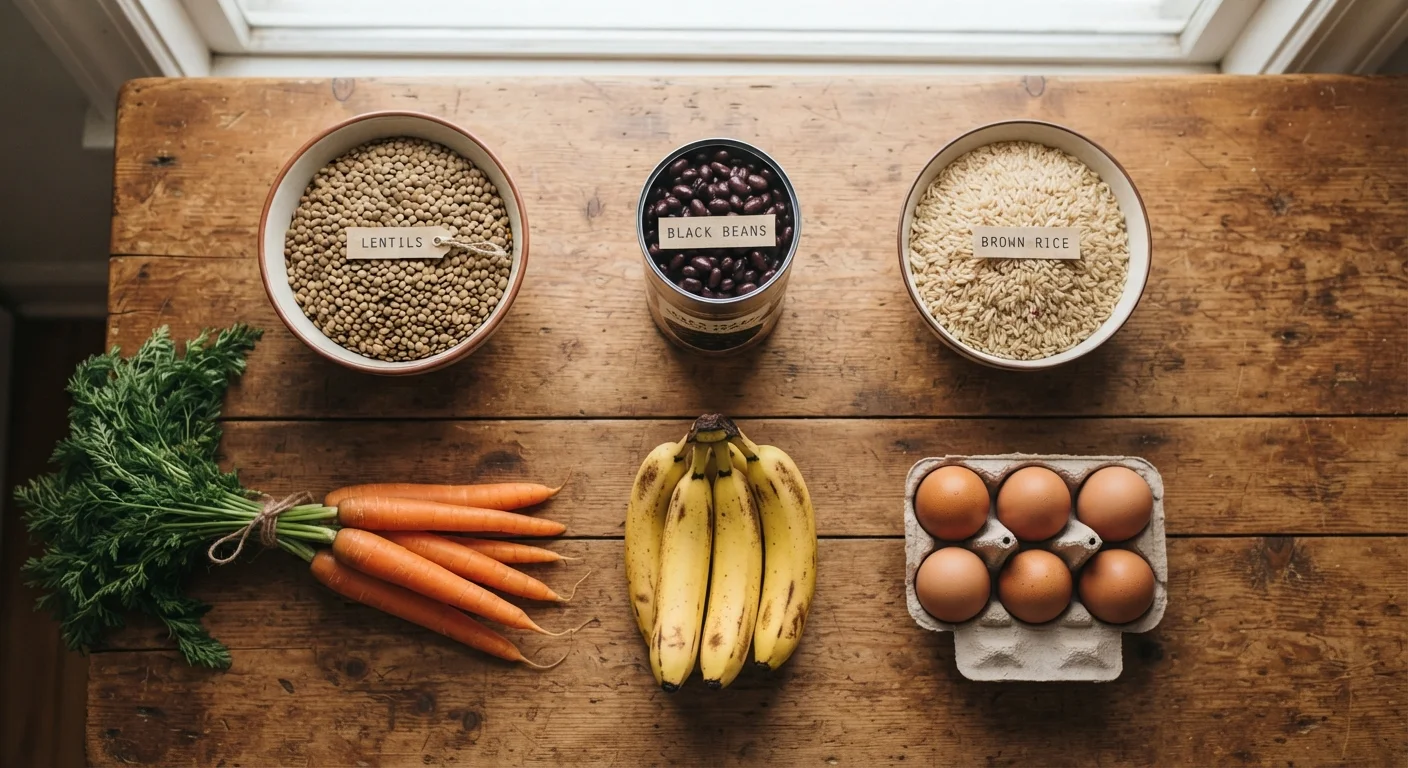
When food is evaluated by nutrient content per dollar, a different picture appears. A bag of dried lentils, for example, provides substantial protein, iron, folate, and fiber for a fraction of the cost of most packaged convenience foods. The same is true of oats, eggs, canned beans, and frozen vegetables. These are not fringe items. They are staples that have supplied adequate nutrition for generations across widely different income levels.
Common beliefs about organic labels and superfoods often push families toward higher-cost options that deliver no measurable nutritional advantage over their affordable alternatives. Understanding what science actually measures, and what it does not, is the first step toward spending less without eating worse.
What nutrition science uses to evaluate food quality
Nutrition researchers use several measures to assess whether a food is worth eating. Nutrient density (the amount of vitamins, minerals, protein, and fiber relative to calories) is one of the most useful. A food can be calorie-dense without being nutrient-dense, and many heavily processed products fall into that category while carrying a higher price tag than whole-food alternatives.
The Dietary Guidelines for Americans, published jointly by the U.S. Department of Agriculture and the Department of Health and Human Services, describe a healthy dietary pattern that centers vegetables, fruit, whole grains, lean proteins, and dairy or fortified alternatives. None of those categories requires premium versions. Frozen spinach satisfies the same nutritional role as fresh. Canned salmon provides omega-3 fatty acids and protein at a lower cost than fresh fillets. Dried chickpeas deliver comparable protein to more expensive animal sources when prepared properly.
$0.25
Approximate cost per serving of dried lentils
USDA food cost data shows dried legumes are among the lowest cost protein sources available in U.S. grocery stores.
~40%
Share of U.S. food supply wasted annually
The USDA Economic Research Service has estimated that roughly 30 to 40 percent of the U.S. food supply is lost or wasted, much of it at the household level.
42 million
Americans with food insecurity
The USDA's annual household food security report documents food insecurity affecting tens of millions of U.S. residents, including millions of children.
Frozen, canned, and fresh produce each have real trade-offs worth understanding before you assume fresh is always better or always worth the premium.
The foods that deliver the most nutrition per dollar
Certain foods appear repeatedly in cost-per-nutrient analyses because they happen to be cheap to produce, store well, and pack a broad nutrient profile. These include:
- Dried lentils and beans: high in protein, fiber, iron, and folate; shelf-stable for months
- Eggs: complete protein source with vitamins D, B12, and choline at a low per-unit cost
- Oats: whole grain with soluble fiber linked to cardiovascular health, low cost per serving
- Canned fish (sardines, mackerel, salmon): omega-3 fatty acids and protein at a fraction of fresh fish prices
- Frozen vegetables (spinach, broccoli, peas, mixed vegetables): nutrient retention is high, waste is low, cost is lower than fresh in most seasons
- Bananas: potassium, vitamin B6, and fiber at a consistently low price per serving
Building meals around these items does not require elaborate recipes. A pot of lentil soup, a vegetable stir-fry over brown rice, or scrambled eggs with frozen greens are complete meals that cost well under two dollars per serving in most U.S. grocery markets.
Where cooking habits matter as much as ingredient selection
Buying affordable ingredients is only part of the equation. Cooking at home rather than buying pre-prepared foods, even pre-prepared foods marketed as healthy, consistently lowers per-meal cost while allowing control over sodium, sugar, and portion size. Batch cooking, where a family prepares large quantities of a base food (a pot of rice, a tray of roasted vegetables, a slow-cooker full of beans) and uses it across multiple meals, stretches both time and money.
Food waste is an underappreciated cost. The U.S. Department of Agriculture has estimated that a significant share of food purchased by households is never eaten. Planning meals before shopping reduces impulse purchases and means less produce spoils before it is used. A small kitchen garden can also supplement grocery spending for families with outdoor space.
Start with one swap, not a full overhaul
Families who try to change their entire diet at once often revert quickly because the shift feels overwhelming. Replacing one high-cost, low-nutrient item per week with a whole-food alternative is a manageable pace that builds lasting habits. After a month, the savings and the new cooking routine both become visible.
For families new to this approach, a practical starting point covers food, movement, and preventive care together as an integrated foundation.
This article provides general nutrition information for educational purposes and is not a substitute for advice from a registered dietitian or healthcare provider. Families with specific health conditions or dietary needs should consult a qualified professional.
Frequently Asked Questions

Author
Healthy Living Cheap Editorial Team
Healthy Living Cheap Editorial Team is the collective byline for our editorial team and contributor network. Articles published under this byline or an editorial pen name are researched, written, and reviewed according to our editorial standards for clarity, consistency, and independence before publication.
View all articles