
Frozen, Canned, or Fresh: Which Produce Is Worth Your Grocery Dollar
In this article
Weighing the nutritional value and cost of fresh, frozen, and canned vegetables and fruit so families can shop smarter without sacrificing health.
Key Takeaways
- Frozen and canned produce are often nutritionally comparable to fresh, and sometimes superior for certain vitamins.
- Fresh produce can cost two to three times more per serving than frozen or canned equivalents.
- Canned produce often contains added sodium or sugar; rinsing beans and vegetables reduces sodium by up to 40 percent.
- The best grocery strategy combines all three forms depending on season, budget, and how quickly food will be used.
- General wellness does not require fresh-only shopping; variety and consistency matter more than form.
What actually happens to nutrients after harvest
The common belief that fresh produce is always the most nutritious option is not well supported by the evidence. Most fresh vegetables and fruit sold in U.S. grocery stores were harvested several days before reaching the shelf, then refrigerated during transport. During that time, water-soluble vitamins such as vitamin C and several B vitamins degrade. A study from the University of California, Davis found that some fresh vegetables lost measurable amounts of vitamin C within three days of refrigerated storage compared with their frozen counterparts.
Frozen produce is typically blanched briefly and then flash-frozen within hours of harvest, which locks in nutrients at their peak. That process does reduce heat-sensitive vitamins to some degree, but the remaining nutritional content is largely stable for months. Canned produce goes through more heat processing, which can reduce vitamin C and folate, though fat-soluble compounds such as lycopene in tomatoes actually become more bioavailable after heat treatment.
The practical takeaway: the gap between fresh and frozen is smaller than most shoppers assume, and in some cases frozen may deliver more of certain nutrients than fresh produce that has spent a week in transit and storage. For a broader look at what research says about affordable nutritious eating, see what nutrition science actually says.
Cost comparison: what families actually pay per serving
Price varies by season, store, and region, so specific figures change over time. The general pattern, however, is consistent: frozen and canned produce cost less per edible serving than fresh alternatives for most items.
| Fresh | Frozen | Canned | |
|---|---|---|---|
| Typical cost per serving | Higher, varies by season | Low, stable year-round | Lowest for most items |
| Nutrient retention | Good if very fresh | High for most vitamins | Reduced vitamin C; lycopene increased |
| Shelf life | 2 to 7 days refrigerated | 8 to 12 months frozen | 1 to several years pantry |
| Food waste risk | High if not used quickly | Low with portioned use | Very low |
| Sodium or sugar added | None | None in plain varieties | Often yes; check label |
| Preparation convenience | Requires washing, trimming | Ready after brief cook | Ready to use after rinsing |
Fresh produce prices swing significantly with season. A pint of fresh blueberries may cost three to four times more in January than in July. Frozen blueberries stay near the same price year-round because supply is stabilized after a summer harvest. Canned beans offer the lowest per-serving cost of most legume options and require no soaking or long cook times.
One cost families sometimes overlook is food waste. Fresh produce spoils, and the USDA has estimated that American households discard roughly 30 percent of the food they purchase. Frozen items used in measured portions eliminate most of that spoilage loss. Canned goods stored in a cool pantry keep for one to several years. When waste is factored in, the effective cost per serving of fresh produce is often higher than the shelf price suggests. Shopping myths that drain household budgets covers related patterns worth knowing.
Reading labels on canned and frozen produce
Not all canned or frozen products are equivalent. Sodium is the main concern with canned vegetables. A half-cup serving of regular canned green beans can contain 300 to 400 milligrams of sodium, compared with nearly zero in plain frozen or fresh. Rinsing canned vegetables under cold water for 30 seconds removes a meaningful portion of that added sodium.
Canned fruit is often packed in heavy syrup, which adds significant sugar. Fruit packed in its own juice or in water is a straightforward alternative and costs about the same. Frozen fruit labeled as containing only the fruit with no added sugar is widely available and generally comparable in price to the sweetened versions.
Check the ingredient list first
The ingredient list on canned and frozen produce should ideally contain only the vegetable or fruit itself, possibly with water or citric acid as a preservative. If salt, syrup, or sauce appears, the product has been processed beyond the plain form. Spending 15 seconds checking the label before placing an item in the cart consistently leads to better value and fewer unwanted additives.
Frozen vegetables with added sauces, cheese, or seasonings often carry premiums in both price and sodium content. Plain frozen vegetables are almost always a better value and give the household more control over seasoning. The same applies to frozen fruit blends marketed as smoothie mixes, which may cost 30 to 50 percent more than plain frozen fruit purchased separately. For more on separating genuine nutrition value from marketing claims, see healthy eating myths that increase spending.
How to mix all three forms for a practical weekly approach
A workable strategy is to assign each produce form to the shopping role it fits best, rather than treating one as universally superior.
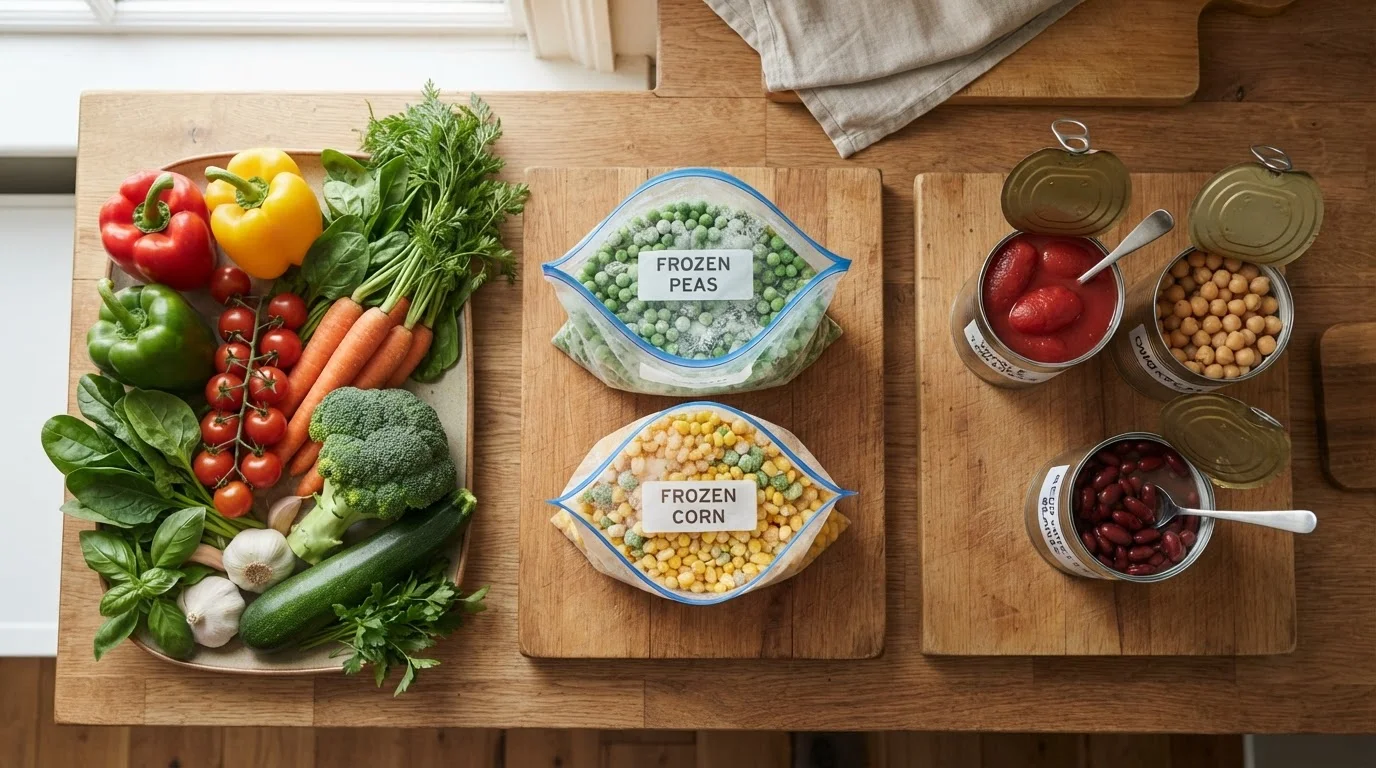
- Fresh: buy what is in season locally, use within two to three days, and prioritize items eaten raw where texture matters, such as lettuce, cucumbers, and apples for snacking.
- Frozen: stock spinach, peas, corn, broccoli, edamame, and mixed berries as reliable staples that go into cooked meals and smoothies without spoilage pressure.
- Canned: keep diced tomatoes, black beans, chickpeas, and lentils in the pantry for fast protein- and fiber-rich meals. Drain and rinse to manage sodium.
This approach reduces waste, keeps the grocery bill predictable, and supports consistent produce intake across the week regardless of what is on sale. For broader strategies on stretching the household food budget, smart shopping habits and family finance basics offer practical frameworks.
This article is for general informational purposes only and is not medical or dietary advice. Consult a registered dietitian or qualified healthcare professional for guidance specific to your family's nutritional needs.

Author
Healthy Living Cheap Editorial Team
Healthy Living Cheap Editorial Team is the collective byline for our editorial team and contributor network. Articles published under this byline or an editorial pen name are researched, written, and reviewed according to our editorial standards for clarity, consistency, and independence before publication.
View all articles