
Stretching a Family Travel Budget: Principles That Hold Up Across Destinations
In this article
From accommodation choices to meal planning on the road, these grounded approaches help families spend less without sacrificing the experience.
Key Takeaways
- Accommodation type has more impact on total trip cost than almost any other single decision a family makes.
- Meal spending is the most controllable line item on any trip and is consistently underplanned.
- Date flexibility, even by 48 hours, can reduce airfare meaningfully without requiring a schedule overhaul.
- Free or low-cost activities at most destinations are abundant but require research before arrival.
- A written trip budget reviewed before booking catches cost gaps that verbal planning misses.
Why these principles apply regardless of where you go
Family travel costs vary enormously by destination, but the mechanisms that inflate or contain those costs are consistent. A family overspending in Orlando makes the same structural errors as one overspending in Rome: reactive booking, underestimating food costs, and choosing accommodation that lacks a kitchen. The principles here are not destination-specific tips. They are planning habits that hold regardless of whether the trip is a national park road trip or a week abroad.
For a broader look at how costs spiral when these habits are absent, see why family vacation costs spiral. And if you are newer to planning affordable trips, this start-to-finish planning primer covers the full sequence from research to packing.
Accommodation: the decision that shapes everything else
Where a family sleeps determines far more than the nightly rate. A hotel room with no kitchen commits the family to eating every meal out, which can add hundreds of dollars to a week-long trip. A vacation rental or extended-stay property with a full kitchen changes the math entirely.
Proximity matters just as much as amenity. Accommodation that appears cheaper but sits far from the destination's main areas often costs more in transportation, time, and exhaustion once those factors are counted. Before finalizing any lodging, map the distance to the activities the family actually plans to do.
Choose accommodation with kitchen access whenever possible
Kitchen access removes the obligation to eat every meal out, which is one of the fastest ways family travel costs grow. It also gives families control over dietary needs and meal timing, which matters more with young children.
Calculate true accommodation cost including transport to activities
A lower nightly rate in a distant area can cost more overall once daily transport is added. Families often discover this mid-trip when it is too late to change.
Set a per-day food budget before departure and track it
Without a daily food target, meal spending defaults to convenience, which is almost always the most expensive option. Tracking keeps the family aligned without requiring constant negotiation.
Research free and low-admission activities before booking anything paid
Paid attractions are easy to find and book at any point. Free options require more lead time to discover and sometimes require advance registration. Doing this research first shapes the itinerary before money is committed.
Write a line-item budget with a contingency buffer before finalizing dates
A written budget makes overspending visible before it happens rather than after. The contingency buffer handles the unpredictable costs that come with traveling alongside children.
Food costs: the most controllable line item
Most families plan their itinerary in detail and leave food spending vague. This is where trips go over budget. Restaurant meals for four people add up fast, particularly in tourist-heavy areas where prices reflect demand rather than local norms.
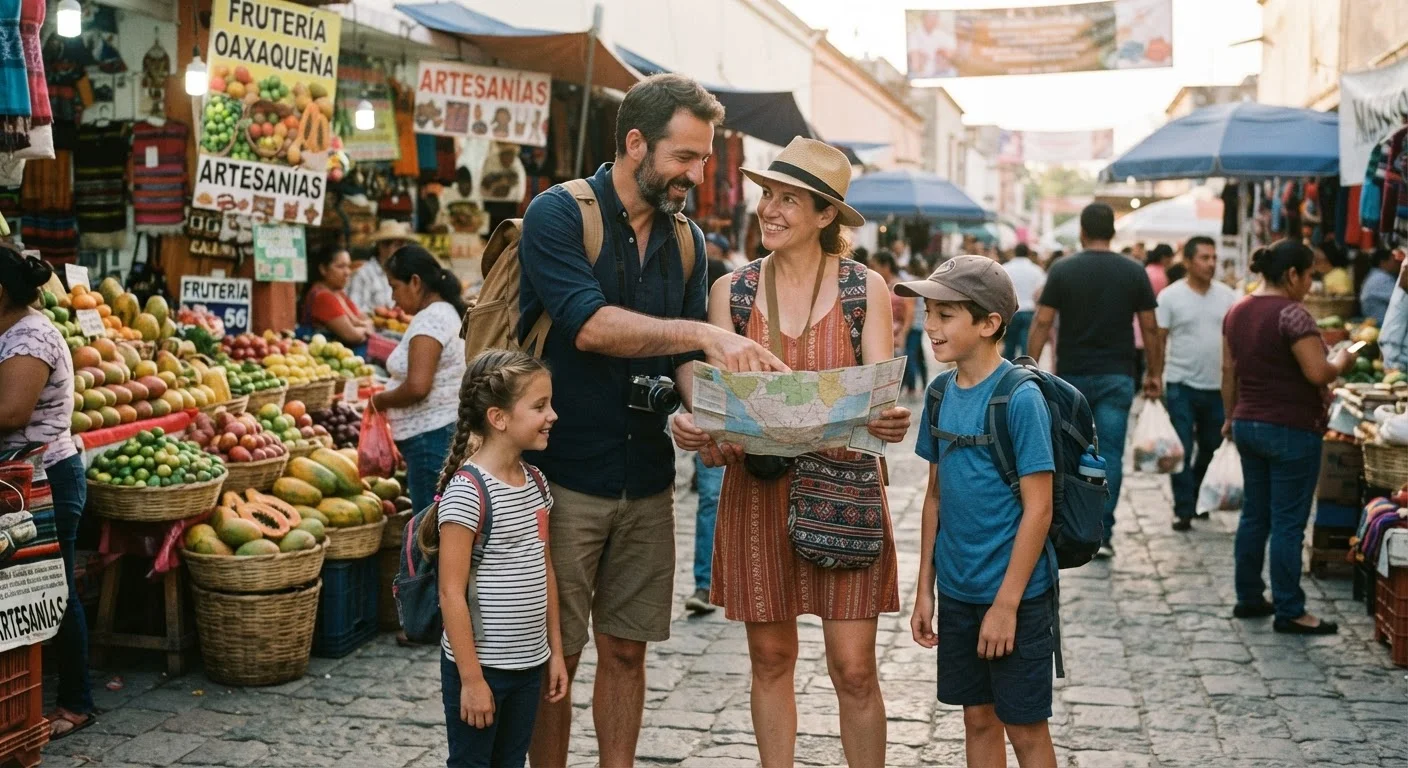
The most reliable approach: stock a cooler or rental kitchen with breakfast and lunch staples at the start of the trip, and treat dinner as the one meal where spending on experience makes sense. Local grocery stores, food halls, and markets also give families a low-cost way to eat food that is actually representative of the place they are visiting. This pre-trip checklist includes a food planning section that many families skip.
Transportation choices and timing
For many families, flights are the largest single cost, and they are also the most date-sensitive. Shifting departure or return by even two days can produce meaningful fare differences. How flexible travel dates affect what families pay goes deeper on this, but the core principle is simple: treat dates as a variable until the budget is set, not after.
For trips within driving distance, the calculus changes. A side-by-side comparison of road trips versus flying lays out the real cost and comfort trade-offs. Driving is not automatically cheaper once fuel, meals en route, and lodging on a long drive are included, but it can be, particularly for families with a fuel-efficient vehicle. Fuel economy habits that reduce pump costs is worth reviewing before any long road trip.
Activities: free options are almost always underused
At most destinations, the ratio of free to paid activities is higher than families assume before they research. National parks, state parks, public beaches, hiking trails, free museum days, public festivals, and library programs exist in nearly every US region and in many international cities. The problem is that these options require planning before arrival. Once a family is on-site and tired, the paid attraction with easy online booking wins by default.
Spending one hour before the trip searching for free or low-admission options in the destination typically produces a full day's worth of activities. This domestic versus international cost comparison shows how free public resources affect the total cost gap between destinations more than most families expect.
Build and review a written budget before booking anything
A verbal sense of what a trip will cost is not a budget. A written budget, even a simple one with line items for accommodation, transportation, food, activities, and a contingency buffer, forces families to find the gaps before money is spent. It also makes trade-offs explicit: spending more on a centrally located rental might reduce transportation costs enough to be worth it.
The contingency buffer is not optional. Travel with children produces unexpected costs: a sick day, a missed connection, a rain day that pushes the family toward a paid indoor activity. A buffer of 10 to 15 percent of the total planned spend absorbs these without forcing stressful in-trip decisions. For broader household financial habits that support this kind of planning, everyday habits for long-term financial stability is a useful companion read.

Author
Budget Travel Tips Editorial Team
Budget Travel Tips Editorial Team is the collective byline for our editorial team and contributor network. Articles published under this byline or an editorial pen name are researched, written, and reviewed according to our editorial standards for clarity, consistency, and independence before publication.
View all articles