
Mulch vs. Rock Ground Cover: Which Makes More Sense for a Low-Maintenance Yard
In this article
Mulch and rock each have real trade-offs for cost, upkeep, and plant health. This side-by-side breakdown helps you choose the right fit for your yard.
Key Takeaways
- Mulch costs less upfront per square foot but needs replenishment every one to three years.
- Rock lasts indefinitely but has a higher initial cost and can raise soil temperature in summer.
- Mulch breaks down into organic matter that feeds soil; rock does not improve soil composition.
- Rock can suppress weeds effectively when laid over landscape fabric, but weeds can still root in debris that settles on top over time.
- Climate and plant type should guide your choice more than cost alone.
How each material actually works
Mulch is organic material, most commonly shredded wood, bark, or wood chips, spread over soil to reduce water evaporation, moderate temperature, and suppress weeds. As it breaks down, it adds carbon and nutrients back into the soil. That decomposition is a benefit in garden beds but also the reason mulch needs periodic replacement.
Rock ground cover, which includes gravel, pea stone, crushed granite, and decorative river rock, is inorganic and permanent. It blocks sunlight to reduce weed germination and keeps moisture in the soil beneath it. Unlike mulch, rock does not feed the soil, and it absorbs heat during the day and releases it at night, which can stress some plants in warm climates.
Both materials require landscape fabric or a physical barrier underneath to perform well. Without it, weeds push through and mixing with soil becomes a problem over time.
| Criterion | Mulch | Rock ground cover |
|---|---|---|
| Upfront cost (per sq ft) | Lower ($0.10-$0.30 bulk) | Higher ($0.50-$1.50+) |
| Lifespan | 1-3 years before replenishment | Indefinite |
| Soil health impact | Adds organic matter over time | No impact on soil composition |
| Moisture retention | Good; slows evaporation | Moderate; can trap heat |
| Weed suppression | Good with 3-4 inch depth | Good initially; debris settles over time |
| DIY-friendliness | Easy; lightweight material | Labor-intensive; material is heavy |
| Best climate | Temperate, humid regions | Hot, arid, or dry climates |
Cost comparison over time
Mulch typically runs between $2 and $5 per cubic foot in bagged form, or less when purchased in bulk by the cubic yard. A 3-inch layer over 100 square feet uses roughly 2.5 cubic yards, which costs approximately $60 to $120 in bulk. However, that cost repeats every one to three years as the material decomposes.
Decorative rock averages $50 to $150 per ton depending on type and region, and a ton covers roughly 50 to 80 square feet at a 2-inch depth. The upfront cost per square foot is higher than mulch, but there is no recurring replacement cost. Over a 10-year period, rock can work out to be less expensive for large, low-traffic areas.
Labor is a real factor. Mulch is light and easy to spread yourself. Gravel and rock are heavy; moving several tons by hand is physically demanding and may require renting equipment or hiring help, which adds to the total cost.
1-3 years
Typical mulch replenishment cycle
Most extension programs suggest replenishing organic mulch annually or every other year to maintain weed suppression and moisture benefits.
3 inches
Recommended mulch depth for weed control
University cooperative extension guidance generally cites 3 to 4 inches as the effective minimum depth for blocking weed germination.
10+ years
Typical lifespan for decorative rock
Because rock does not decompose, a single installation in a low-traffic area can remain serviceable for a decade or more without replacement.
Weed control: what the research actually shows
Both materials suppress weeds primarily by blocking light. Mulch at 3 to 4 inches deep prevents most annual weed seeds from germinating. Rock at 2 to 3 inches does the same. In both cases, a layer of landscape fabric beneath the material improves results significantly.
Over time, organic debris, soil, and windblown seeds settle into rock beds, creating a thin growing medium on top of the rock. Weeds can root in this layer, and because rock is hard to lift and clean, removal becomes more difficult than in a mulch bed. Mulch beds are easier to weed by hand because the material is loose and workable.
Landscape fabric: helpful but not a complete fix
Landscape fabric under rock reduces weed pressure considerably, but it is not permanent. Over several years, the fabric can degrade, shift, or become clogged with debris, reducing drainage. When that happens, removing rock to replace the fabric is a significant project. Checking fabric condition every few years is worth the effort.
Which one fits your yard
Climate is the most practical guide. In humid, temperate climates across the Midwest and Southeast, mulch performs well because it retains moisture and breaks down at a useful rate. In hot, dry climates common to the Southwest, rock suits xeriscape gardens with cacti, succulents, and drought-tolerant shrubs better than organic mulch, which can mat and hold moisture in ways that encourage root rot in those plants.
Plant selection matters too. Most flowering perennials, roses, and vegetable beds benefit from the moisture retention and soil improvement that mulch provides. Ornamental grass plantings and native meadow gardens often do fine with either material, though mulch requires attention to avoid smothering crowns.
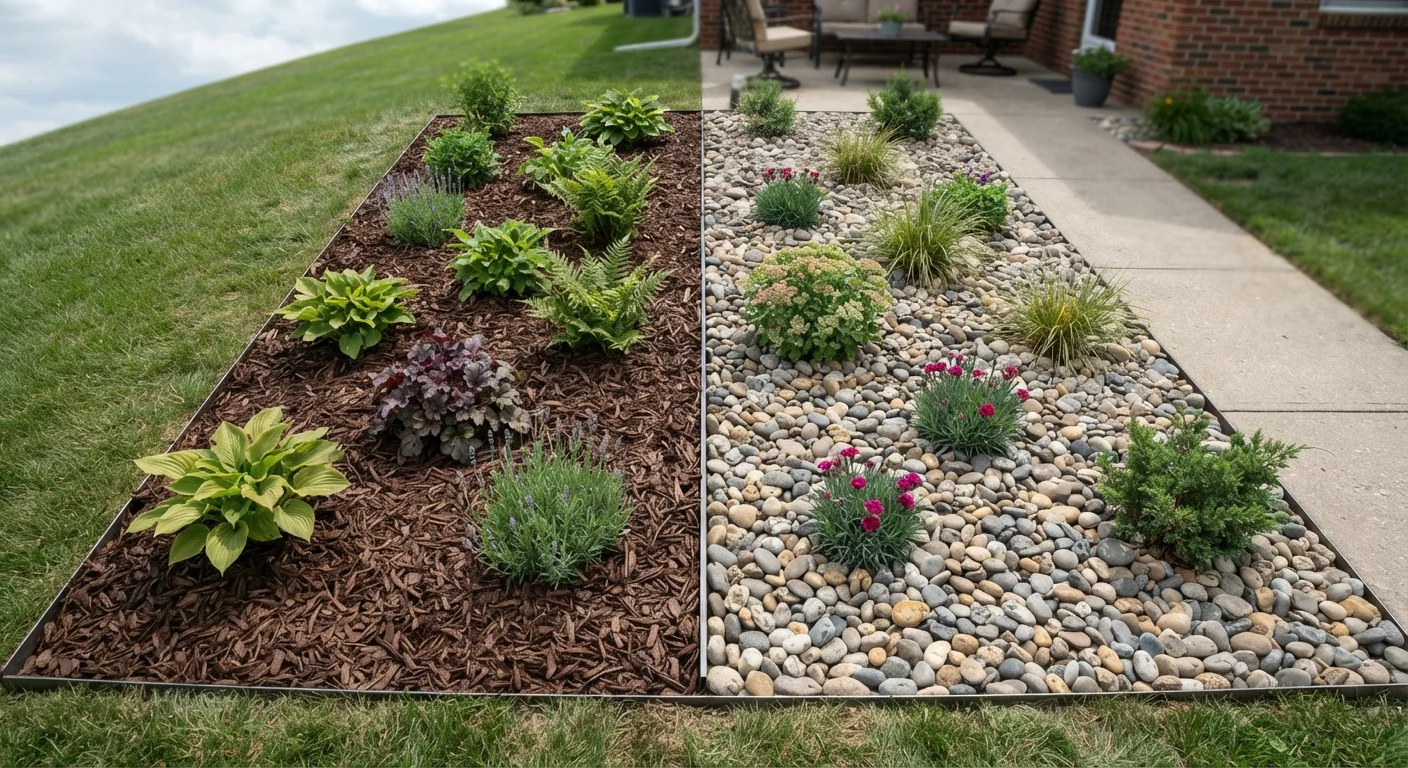
For a mixed yard, many homeowners use mulch in planted beds and rock in utility strips, along foundations, or on paths. That combination uses each material where it performs best without committing the entire yard to one approach.

Author
Home on a Budget Editorial Team
Home on a Budget Editorial Team is the collective byline for our editorial team and contributor network. Articles published under this byline or an editorial pen name are researched, written, and reviewed according to our editorial standards for clarity, consistency, and independence before publication.
View all articles