
What Your Vehicle's Owner Manual Is Actually Telling You
In this article
The owner manual contains the manufacturer's own maintenance schedule and fluid specs. Learning to read it can prevent unnecessary service upsells.
Key Takeaways
- The owner's manual contains the manufacturer's own maintenance intervals, not a shop's upsell schedule.
- Fluid specifications in the manual tell you exactly what grade and type your vehicle actually requires.
- Many "severe duty" maintenance schedules apply to ordinary city driving, not just off-road or commercial use.
- Warning light descriptions in the manual can help you judge urgency before calling a mechanic.
- Following the manual's schedule, rather than generic advice, is the baseline for protecting your warranty.
What the manual actually contains
Most owner's manuals run between 200 and 400 pages. A large portion of that space covers safety information and features, but two sections are worth returning to regularly: the maintenance schedule and the fluid specifications table.
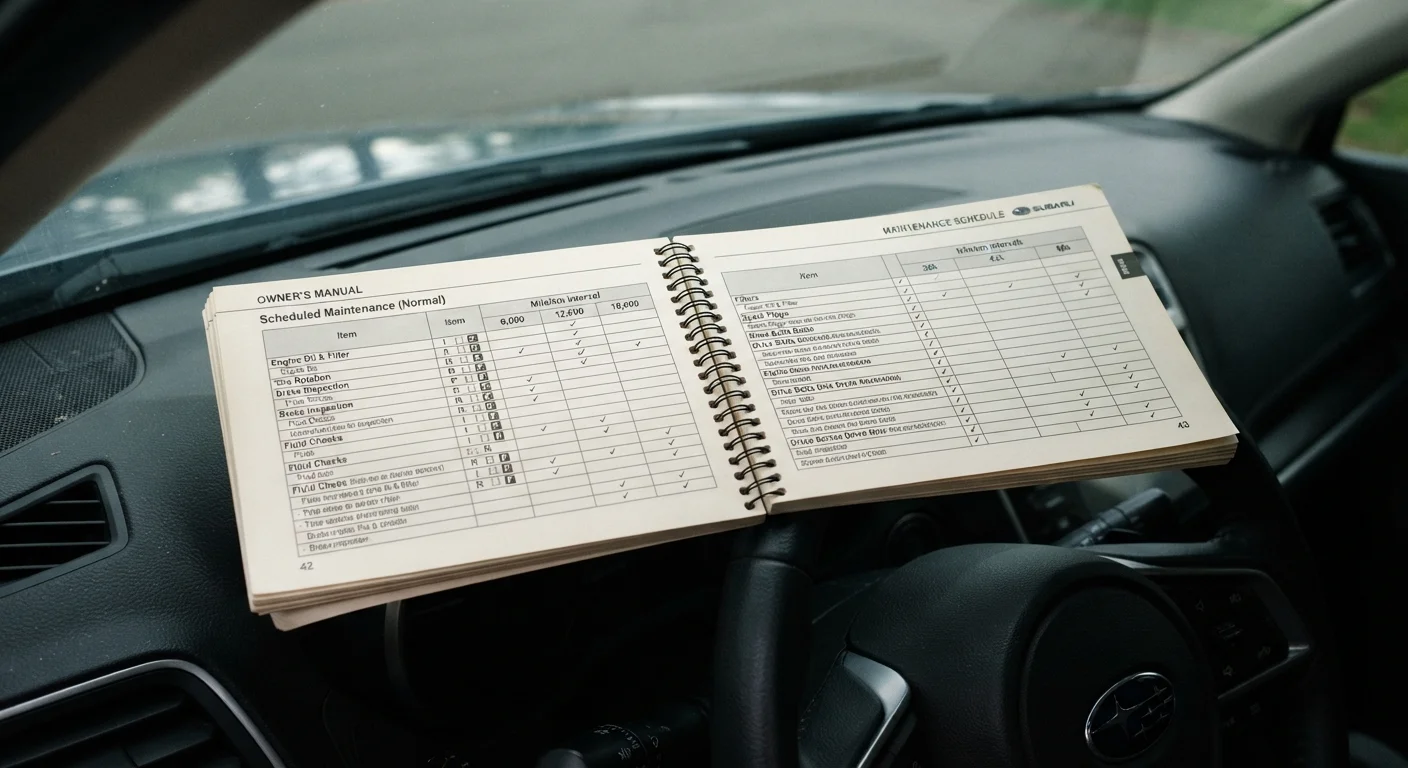
The maintenance schedule lists every service interval by mileage or time, whichever comes first. Oil changes, air filter replacements, spark plug inspections, brake fluid checks, and transmission service all appear here with the manufacturer's own recommended timing. This schedule is based on the engineering of your specific engine, transmission, and drivetrain, not a generic estimate.
The fluid specifications section tells you the exact grade of engine oil, coolant type, brake fluid specification, and transmission fluid your vehicle requires. These are not suggestions. Using the wrong coolant type, for example, can cause corrosion inside the cooling system over time. The manual removes any guesswork about compatibility.
Widespread myths about car care often conflict with what the manual actually says. Premium fuel is a common example: the manual will state clearly whether your engine requires it or merely tolerates it, which is a meaningful distinction for your fuel budget.
How shops sometimes differ from the manual
Quick-lube shops and dealership service advisors often recommend intervals shorter than what the manual specifies. An oil change every 3,000 miles is a durable piece of advice, but many modern engines with synthetic oil are designed to go 5,000, 7,500, or even 10,000 miles between changes. The correct interval is in your manual.
This is not necessarily dishonest practice. Some advisors work from conservative industry defaults rather than model-specific data. Others correctly identify that your driving pattern, frequent short trips, cold starts, or stop-and-go commutes, qualifies as severe duty under the manual's own definition, which does call for shorter intervals.
The point is that you can only have that conversation if you have read the manual first. Without it, you are comparing a shop's recommendation against nothing.
Locate your digital manual now
Search your vehicle manufacturer's website for "owner's manual" along with your model year and trim. Download the PDF and save it somewhere easy to access on your phone. Having it available before a service appointment means you can check intervals and fluid specs in real time, without pressure.
Understanding the full picture of what car ownership costs goes beyond oil changes. See what total car ownership actually costs to see how maintenance fits into the bigger financial picture.
Warning lights and what the manual tells you about urgency
Warning lights are one of the most misread parts of any dashboard. The owner's manual includes a section that identifies every warning and indicator light for your vehicle, along with what action the manufacturer recommends. Some lights require you to pull over immediately. Others note that you can continue driving and schedule service within a set number of miles.
Knowing the difference matters practically and financially. A low tire pressure light typically means you can add air and continue. An oil pressure warning is a stop-now situation. The manual lays this out without ambiguity.
For drivers with older, higher-mileage vehicles, the manual's guidance on warning lights pairs well with a broader maintenance strategy. Keeping a high-mileage car running well often comes down to responding to the right signals at the right time.
Using the manual to avoid unnecessary expenses
The maintenance schedule in the manual is the baseline the manufacturer uses to honor warranty coverage. Servicing the vehicle according to that schedule, and keeping records of it, is the straightforward way to document proper care if a warranty claim ever arises. Doing more than the schedule requires is not inherently harmful, but it costs money that may not be necessary.
Delaying service below the manual's intervals is where real risk enters. Skipping scheduled maintenance often costs far more in repairs than the service itself would have. The manual's schedule exists because engineers determined those intervals protect the vehicle over its intended lifespan.
Locating the manual takes about two minutes if you have a digital version bookmarked. Cross-referencing it before your next service appointment takes five. Those seven minutes can inform whether a recommended service is timely, early, or not applicable to your vehicle at all.
Frequently Asked Questions

Author
Affordable Car Care Editorial Team
Affordable Car Care Editorial Team is the collective byline for our editorial team and contributor network. Articles published under this byline or an editorial pen name are researched, written, and reviewed according to our editorial standards for clarity, consistency, and independence before publication.
View all articles