
Pre-Winter Vehicle Checklist for Families on a Budget
In this article
Cold weather stresses tires, batteries, and fluids. This checklist covers what to inspect and address before winter arrives, without overspending.
Key Takeaways
- Cold weather accelerates battery drain, tire pressure loss, and fluid degradation faster than any other season.
- Many pre-winter checks can be done at home with basic tools, avoiding labor costs entirely.
- Catching small problems before the first freeze is almost always cheaper than fixing them after a breakdown.
- Tires, battery, and coolant are the three areas that cause the most winter roadside failures.
- Budgeting a small amount now for preventive maintenance is more predictable than an emergency repair bill.
Why winter preparation matters for family budgets
Winter is the most expensive season to have a car problem. Tow trucks, emergency repairs, and last-minute tire purchases all cost more when demand spikes in cold weather. Families who plan ahead spend less overall, because they control the timing and can compare prices rather than reacting to a breakdown on the side of a frozen road.
The checks below are organized so you can work through them yourself at home, or walk into a shop knowing exactly what to ask about. Neither approach requires mechanical expertise. What it does require is a couple of hours before the cold settles in for good. If you already run an annual review of your household expenses, folding vehicle prep into that process makes sense. See the annual financial check-up guide for a broader framework families can use.
Know your limits before starting
This checklist covers inspections and simple maintenance most drivers can do themselves. Brake work, coolant system repairs, belt replacement, and electrical diagnosis should be handled by a qualified mechanic. Attempting those repairs without the right tools and experience can cause injury or vehicle damage. If any inspection turns up a problem you are unsure about, get a professional opinion before driving in winter conditions.
What you will need
Most of these tasks only require items you likely already have, or inexpensive tools available at any auto parts store. Gather them before you start so you move through the checklist without stopping.
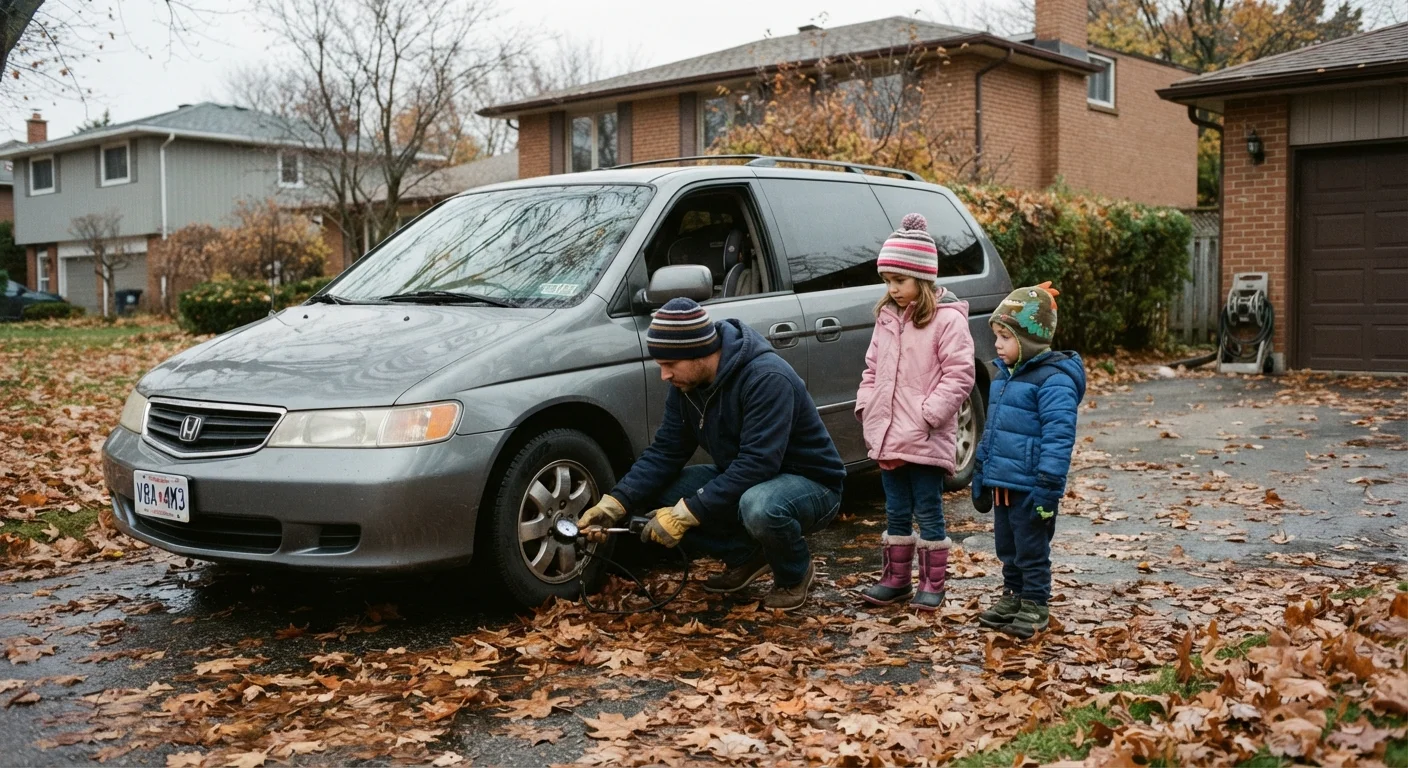
Tire pressure gauge
Measures tire inflation so you can bring each tire to the correct pressure before cold weather causes further drops.
Tread depth gauge
Gives a precise measurement of remaining tire tread, removing guesswork from the penny test.
Coolant or antifreeze tester
Tests whether your coolant mixture is concentrated enough to protect the engine at your region's lowest expected temperature.
Battery load tester (or free store test)
Determines whether your battery can deliver enough power to start the engine in cold temperatures.
Jumper cables or portable jump starter pack
Provides a backup start if the battery fails, and belongs in the vehicle all winter as part of an emergency kit.
Flashlight
Lets you inspect fluid levels, tires, and belts in low-light conditions such as under a car on a short winter day.
The full pre-winter checklist
Work through each group in order. The groups are roughly prioritized: the first two cover the items most likely to strand your family, and the later groups cover comfort, visibility, and preparedness.
Battery and electrical
Tires
Fluids
Wipers and visibility
Belts, brakes, and heating
Emergency kit and preparedness
If your vehicle is due for any repairs beyond routine maintenance, getting estimates from multiple shops before winter arrives gives you time to compare costs and plan payment. The same principle applies to any significant household expense. The family finance basics hub has practical guidance on setting aside funds for irregular costs like car repairs.
Keeping costs down without cutting corners
Some items on this checklist, like topping off windshield washer fluid or replacing wiper blades, cost very little. Others, like replacing a battery or a set of tires, are a real line item. Here is how to approach the bigger costs without overspending.
For tires, check the tread depth yourself using the penny test (insert a penny into a tread groove with Lincoln's head pointing down: if you can see the top of his head, the tread is below 2/32 of an inch and the tire needs replacing). If tread is borderline, a mechanic can give you a written measurement so you can make a documented decision rather than guessing.
For batteries, most auto parts stores will test your battery at no charge. Get the test result in writing. A battery showing a weak charge that still passes a load test may last another season; one that fails the load test will likely leave you stranded. Knowing which situation you are in lets you budget appropriately rather than replacing prematurely or waiting too long.
Seasonal home and vehicle prep share the same logic: addressing small issues early prevents large repair bills later. The same thinking that applies to seasonal home maintenance works here. Preventive spending is almost always more predictable than emergency spending.
This article is for general informational purposes only. Always follow your vehicle manufacturer's service recommendations and consult a qualified mechanic for repairs or inspections beyond your comfort level.

Author
Affordable Car Care Editorial Team
Affordable Car Care Editorial Team is the collective byline for our editorial team and contributor network. Articles published under this byline or an editorial pen name are researched, written, and reviewed according to our editorial standards for clarity, consistency, and independence before publication.
View all articles